

Auditing large language models: a three-layered approach
J Mökander, J Schuett, H R Kirk, L Floridi
[University of Oxford & Centre for the Governance of AI]
审计大型语言模型的三层方法
要点:
-
审计程序的设计,必须能够捕捉到 LLM 所带来的风险,并且必须在一个结构化的过程中进行连接; -
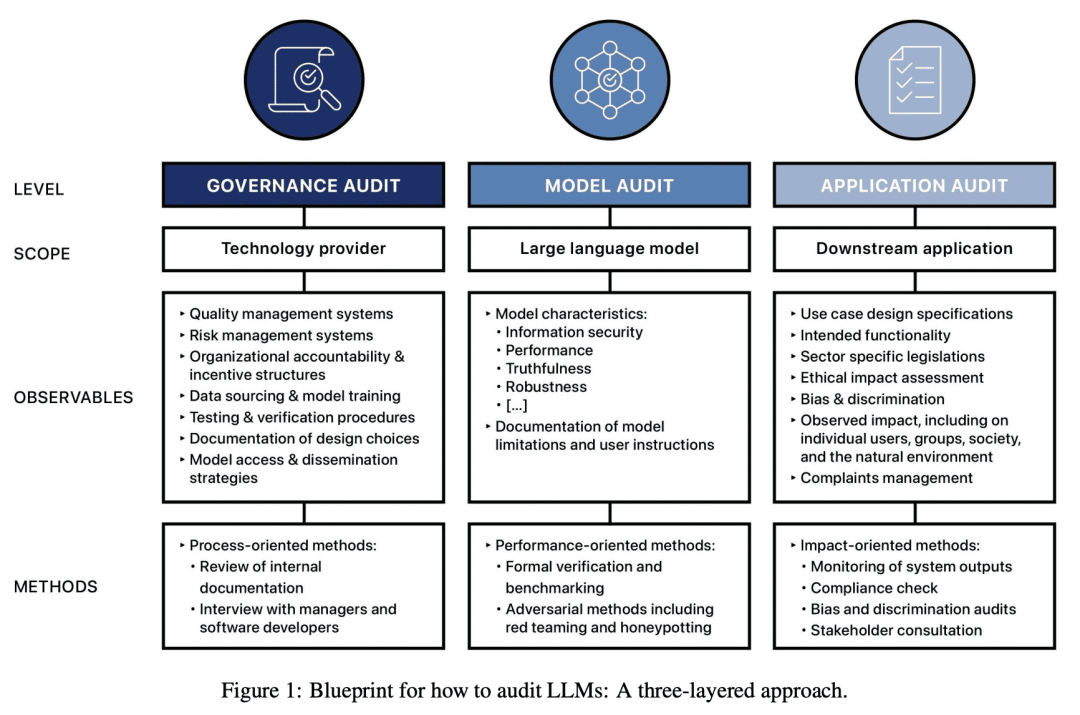
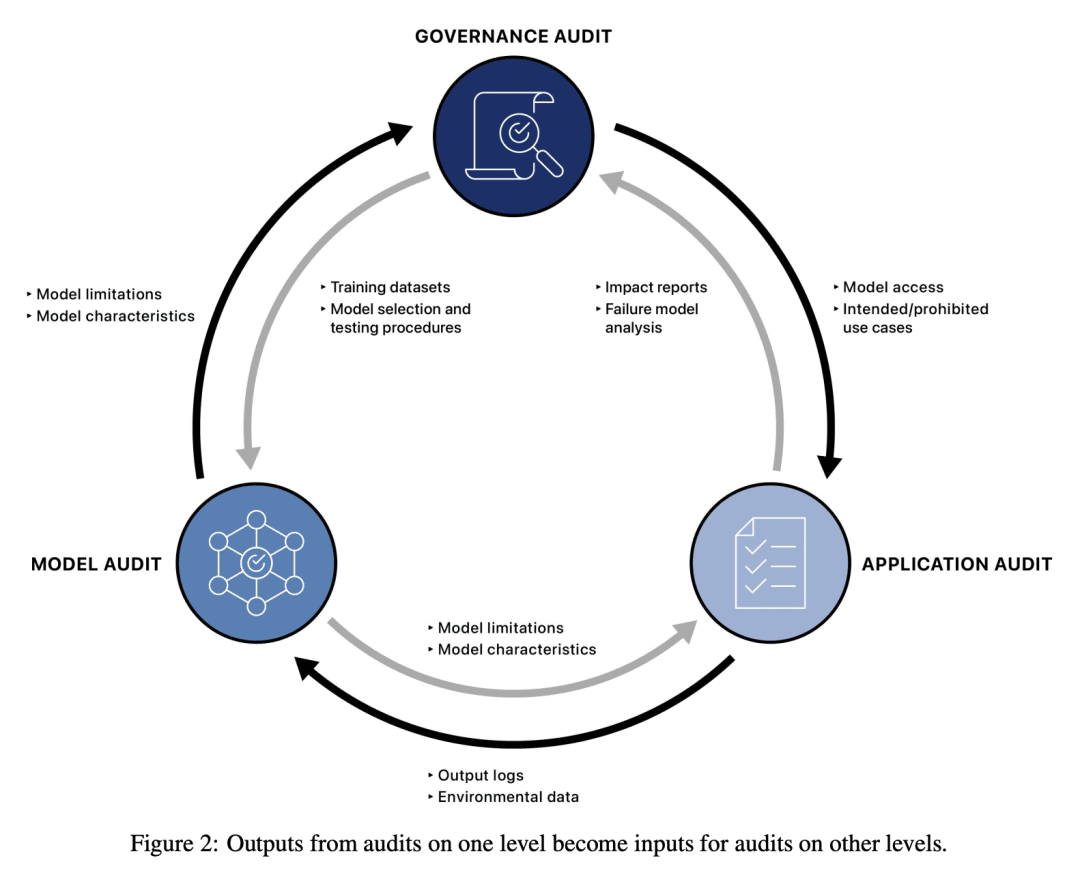
提出三层方法,包括治理审计、模型审计和应用审计; -
审计必须由独立的第三方进行,以确保 LLM 的道德、法律和技术上的健全; -
该方法的有效性取决于协调的审计和对结构化过程的需求。
一句话总结:
提出了一个审计大型语言模型(LLM)的三层方法,以应对道德和治理的挑战。
The emergence of large language models (LLMs) represents a major advance in artificial intelligence (AI) research. However, the widespread use of LLMs is also coupled with significant ethical and social challenges. Previous research has pointed towards auditing as a promising governance mechanism to help ensure that AI systems are designed and deployed in ways that are ethical, legal, and technically robust. However, existing auditing procedures fail to address the governance challenges posed by LLMs, which are adaptable to a wide range of downstream tasks. To help bridge that gap, we offer three contributions in this article. First, we establish the need to develop new auditing procedures that capture the risks posed by LLMs by analysing the affordances and constraints of existing auditing procedures. Second, we outline a blueprint to audit LLMs in feasible and effective ways by drawing on best practices from IT governance and system engineering. Specifically, we propose a three-layered approach, whereby governance audits, model audits, and application audits complement and inform each other. Finally, we discuss the limitations not only of our three-layered approach but also of the prospect of auditing LLMs at all. Ultimately, this article seeks to expand the methodological toolkit available to technology providers and policymakers who wish to analyse and evaluate LLMs from technical, ethical, and legal perspectives.
https://arxiv.org/abs/2302.08500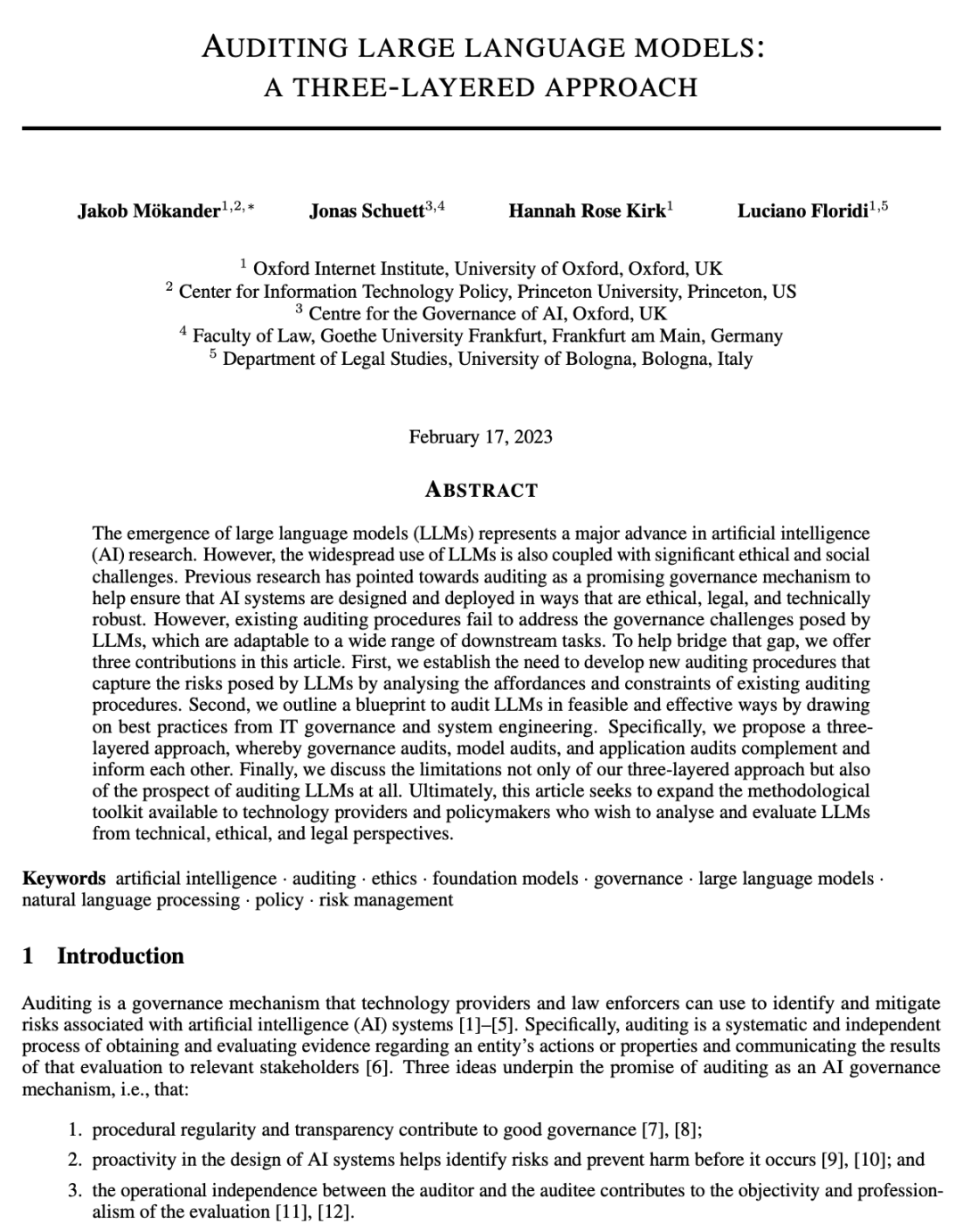
内容中包含的图片若涉及版权问题,请及时与我们联系删除

评论
沙发等你来抢