

✅作者简介:热爱科研的Matlab仿真开发者,修心和技术同步精进,matlab项目合作可私信。
🍎个人主页:Matlab科研工作室
🍊个人信条:格物致知。
更多Matlab仿真内容点击👇
⛄ 内容介绍
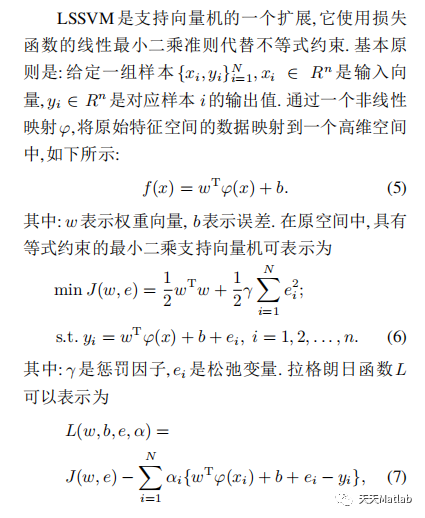
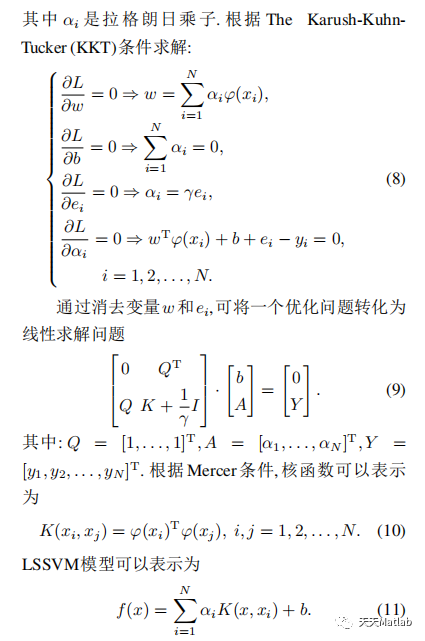
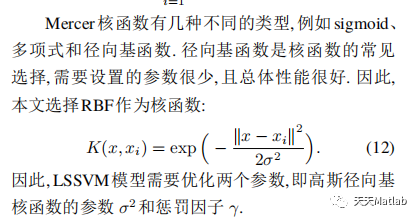
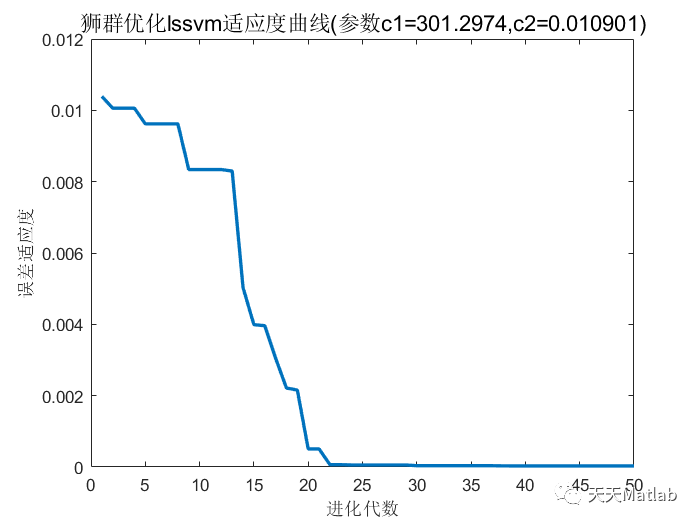
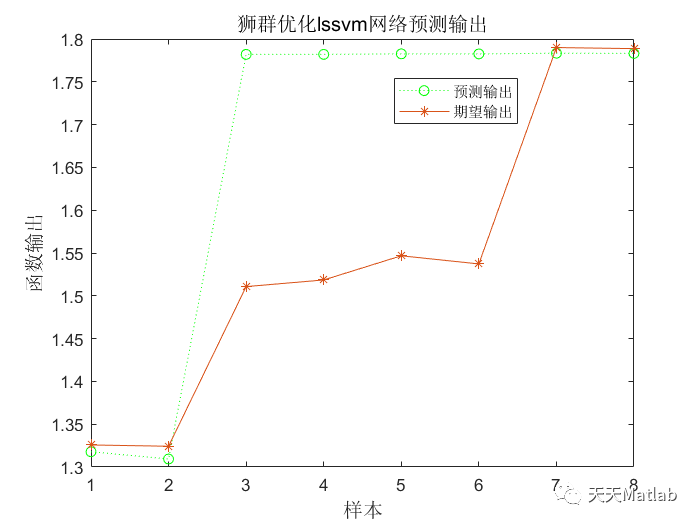
井下动液面是抽油井的一个重要生产参数,能够反映抽油井的生产效率.采用基于时间序列分析的方法对动液面进行预测,首先由最小二乘支持向量机(LSSVM)方法建立预测模型,对其中的正则化参数和核函数参数采用狮群算法(LSO)进行优化选取.实例验证了本文所提出算法的有效性.
⛄ 部分代码
function [out1,out2] = mapminmax(in1,in2,in3,in4)
%MAPMINMAX Map matrix row minimum and maximum values to [-1 1].
%
% Syntax
%
% [y,ps] = mapminmax(x,ymin,ymax)
% [y,ps] = mapminmax(x,fp)
% y = mapminmax('apply',x,ps)
% x = mapminmax('reverse',y,ps)
% dx_dy = mapminmax('dx',x,y,ps)
% dx_dy = mapminmax('dx',x,[],ps)
% name = mapminmax('name');
% fp = mapminmax('pdefaults');
% names = mapminmax('pnames');
% mapminmax('pcheck', fp);
%
% Description
%
% MAPMINMAX processes matrices by normalizing the minimum and maximum values
% of each row to [YMIN, YMAX].
%
% MAPMINMAX(X,YMIN,YMAX) takes X and optional parameters,
% X - NxQ matrix or a 1xTS row cell array of NxQ matrices.
% YMIN - Minimum value for each row of Y. (Default is -1)
% YMAX - Maximum value for each row of Y. (Default is +1)
% and returns,
% Y - Each MxQ matrix (where M == N) (optional).
% PS - Process settings, to allow consistent processing of values.
%
% MAPMINMAX(X,FP) takes parameters as struct: FP.ymin, FP.ymax.
% MAPMINMAX('apply',X,PS) returns Y, given X and settings PS.
% MAPMINMAX('reverse',Y,PS) returns X, given Y and settings PS.
% MAPMINMAX('dx',X,Y,PS) returns MxNxQ derivative of Y w/respect to X.
% MAPMINMAX('dx',X,[],PS) returns the derivative, less efficiently.
% MAPMINMAX('name') returns the name of this process method.
% MAPMINMAX('pdefaults') returns default process parameter structure.
% MAPMINMAX('pdesc') returns the process parameter descriptions.
% MAPMINMAX('pcheck',fp) throws an error if any parameter is illegal.
%
% Examples
%
% Here is how to format a matrix so that the minimum and maximum
% values of each row are mapped to default interval [-1,+1].
%
% x1 = [1 2 4; 1 1 1; 3 2 2; 0 0 0]
% [y1,ps] = mapminmax(x1)
%
% Next, we apply the same processing settings to new values.
%
% x2 = [5 2 3; 1 1 1; 6 7 3; 0 0 0]
% y2 = mapminmax('apply',x2,ps)
%
% Here we reverse the processing of y1 to get x1 again.
%
% x1_again = mapminmax('reverse',y1,ps)
%
% Algorithm
%
% It is assumed that X has only finite real values, and that
% the elements of each row are not all equal.
%
% y = (ymax-ymin)*(x-xmin)/(xmax-xmin) + ymin;
%
% See also FIXUNKNOWNS, MAPSTD, PROCESSPCA, REMOVECONSTANTROWS
% Copyright 1992-2007 The MathWorks, Inc.
% $Revision: 1.1.6.11 $
% Process function boiler plate script
boiler_process
%%%%%%%%%%%%%%%%%%%%%%%%%%%%%%%%%%%%%%%%% Name
function n = name
n = 'Map Minimum and Maximum';
%%%%%%%%%%%%%%%%%%%%%%%%%%%%%%%%%%%%%%%%% Parameter Defaults
function fp = param_defaults(values)
if length(values)>=1, fp.ymin = values{1}; else fp.ymin = -1; end
if length(values)>=2, fp.ymax = values{2}; else fp.ymax = fp.ymin + 2; end
%%%%%%%%%%%%%%%%%%%%%%%%%%%%%%%%%%%%%%%%% Parameter Names
function names = param_names()
names = {'Mininum value for each row of Y.', 'Maximum value for each row of Y.'};
%%%%%%%%%%%%%%%%%%%%%%%%%%%%%%%%%%%%%%%%% Parameter Check
function err = param_check(fp)
mn = fp.ymin;
mx = fp.ymax;
if ~isa(mn,'double') || any(size(mn)~=[1 1]) || ~isreal(mn) || ~isfinite(mn)
err = 'ymin must be a real scalar value.';
elseif ~isa(mx,'double') || any(size(mx)~=[1 1]) || ~isreal(mx) || ~isfinite(mx) || (mx <= mn)
err = 'ymax must be a real scalar value greater than ymin.';
else
err = '';
end
%%%%%%%%%%%%%%%%%%%%%%%%%%%%%%%%%%%%%%%%% New Process
function [y,ps] = new_process(x,fp)
% Replace NaN with finite values in same row
rows = size(x,1);
for i=1:rows
finiteInd = find(full(~isnan(x(i,:))),1);
if isempty(finiteInd)
xfinite = 0;
else
xfinite = x(finiteInd);
end
nanInd = isnan(x(i,:));
x(i,nanInd) = xfinite;
end
ps.name = 'mapminmax';
ps.xrows = size(x,1);
ps.xmax = max(x,[],2);
ps.xmin = min(x,[],2);
ps.xrange = ps.xmax-ps.xmin;
ps.yrows = ps.xrows;
ps.ymax = fp.ymax;
ps.ymin = fp.ymin;
ps.yrange = ps.ymax-ps.ymin;
if any(ps.xmax == ps.xmin)
warning('NNET:Processing','Use REMOVECONSTANTROWS to remove rows with constant values.');
end
y = apply_process(x,ps);
%%%%%%%%%%%%%%%%%%%%%%%%%%%%%%%%%%%%%%%%% Apply Process
function y = apply_process(x,ps)
Q = size(x,2);
oneQ = ones(1,Q);
rangex = ps.xmax-ps.xmin;
rangex(rangex==0) = 1; % Avoid divisions by zero
rangey = ps.ymax-ps.ymin;
y = rangey * (x-ps.xmin(:,oneQ))./rangex(:,oneQ) + ps.ymin;
%%%%%%%%%%%%%%%%%%%%%%%%%%%%%%%%%%%%%%%%% Reverse Process
function x = reverse_process(y,ps)
Q = size(y,2);
oneQ = ones(1,Q);
rangex = ps.xmax-ps.xmin;
rangey = ps.ymax-ps.ymin;
x = rangex(:,oneQ) .* (y-ps.ymin)*(1/rangey) + ps.xmin(:,oneQ);
%%%%%%%%%%%%%%%%%%%%%%%%%%%%%%%%%%%%%%%%% Derivative of Y w/respect to X
function dy_dx = derivative(x,y,ps);
Q = size(x,2);
rangex = ps.xmax-ps.xmin;
rangey = ps.ymax-ps.ymin;
d = diag(rangey ./ rangex);
dy_dx = d(:,:,ones(1,Q));
%%%%%%%%%%%%%%%%%%%%%%%%%%%%%%%%%%%%%%%%% Derivative of Y w/respect to X
function dx_dy = reverse_derivative(x,y,ps);
Q = size(x,2);
rangex = ps.xmax-ps.xmin;
rangey = ps.ymax-ps.ymin;
d = diag(rangex ./ rangey);
dx_dy = d(:,:,ones(1,Q));
%%%%%%%%%%%%%%%%%%%%%%%%%%%%%%%%%%%%%%%%%
function p = simulink_params(ps)
p = ...
{ ...
'xmin',mat2str(ps.xmin);
'xmax',mat2str(ps.xmax);
'ymin',mat2str(ps.ymin);
'ymax',mat2str(ps.ymax);
};
%%%%%%%%%%%%%%%%%%%%%%%%%%%%%%%%%%%%%%%%%
function p = simulink_reverse_params(ps)
p = ...
{ ...
'xmin',mat2str(ps.xmin);
'xmax',mat2str(ps.xmax);
'ymin',mat2str(ps.ymin);
'ymax',mat2str(ps.ymax);
};
%%%%%%%%%%%%%%%%%%%%%%%%%%%%%%%%%%%%%%%%%
⛄ 运行结果
⛄ 参考文献
[1]刘云, 易松. 基于双参数最小二乘支持向量机(TPA-LSSVM)的风电时间序列预测模型的优化研究[J]. 北京化工大学学报:自然科学版, 2019, 46(2):6.
[2]李雪竹, 陈国龙. 基于智能最小二乘支持向量机的大数据分析与预测[J]. 计算机工程, 2015.
⛄ Matlab代码关注
❤️部分理论引用网络文献,若有侵权联系博主删除
❤️ 关注我领取海量matlab电子书和数学建模资料
内容中包含的图片若涉及版权问题,请及时与我们联系删除

评论
沙发等你来抢